Thursday, August 25, 2011

Saturday, August 27th, Field Day Outline

Cayo Ron located 8 km off of Cabo Rojo and 13 km from Boqueron Bay (~250 acres)

Our goal for Saturday is to survey the reef like the image below.  This entails dragging, pulling, or swimming a GPS around with volunteers while looking for debris.  If and when we find debris we will mark it with a waypoint, log the type of debris, size, etc., then remove it.  However, on Saturday we will be removing only the small debris such as clothing, fishing line, rope, etc. that is smothering the reef.  Other large objects, so long as they have not become encrusted or overgrown with corals, will be lifted with lift bags and swam to an accessible sand area and left to be removed on the 3rd field day to Cayo Ron (to be announced) along with the large boat hull.  Most of the survey work we will be doing will be confined to depths less than 15-20' deep.   


Survey of Reserva Marina Tres Palmas and adjacent areas (500 acres).

Timeline of events

715-730 am      Participants arrive at Monaquatics (click the link for directions/location)

730-745 am     Day Briefing
 
800 am             Leave the dock

 830 am           Arrive to Cayo Ron

830-900 am     Break into teams

900-1100 am   Dive 1

11-1230 pm     Lunch

1-230 pm        Dive 2

 300 pm           Leave for home

 330 pm           Arrive at dock

Things to bring

Sunscreen
Sunglasses
Snorkeling or Dive gear
Lunch
Water
Rashguard or wetsuit
$10 bucks for a tank if you have dive gear
water camera

Please be on time! 

Contact Wessley Merten at 787-436-8300 or wessley.merten@upr.edu for more information on helping out in this coral reef restoration and marine debris removal effort.

Saturday, August 6, 2011

Un Nuevo Proyecto de Desperdicios Marinos

Click here for english

Recientemente, el capítulo de la Fundación Surfrider en Rincón recibió una subvención de la Administración Nacional Oceánica y Atmosférica (NOAA) Programa de Desechos Marinos hacer otra proyecto de restauración de los arrecifes con la remoción de desechos marinos en Puerto Rico. Este es el tercer proyecto que el capítulo de Rincón ha recibido de la NOAA hasta que el primer proyecto en 2006. Ese proyecto, junto con la segunda, que se completó en 2008, eliminó más de 475 gomas y un montón de otros desperdicios como partes de lanchas, bloques de cemento, cable, y la ropa que todos los afectado negativamente a la salud de los corales y otros organismos dentro de los Tres Palmas la Reserva Marina. En total, 150 corales individuales se salvaron de la asfixia y en detrimento de los desechos marinos. Ahora, en 2011, el capítulo se complace en anunciar el título de su tercer trabajo: Protección de los Arrecifes de Coral a través de eliminación de desechos marinos en dos Áreas Marinas Protegidas (AMPs): Arrecifes de Tourmaline y Reserva Marina Tres Palmas.

El sitio de estudio principal de este proyecto es Cayo Ron dentro de Arrecifes de Turmalina (de Cabo Rojo) como se describe anteriormente. La imagen superior muestra Cayo de Ron, la densidad de cuerno de alce (círculos de colores), y la ubicación de un gran parte de un barco (signos) que se corta en trozos y se retira. (Fig. M. Scharer and M. Nemeth)

La figura anterior muestra el sitio de estudio secundario, RMTP (línea de color negro sólido), los desechos marinos previamente marcados, y la extensión del proyecto indicado por la línea punteada negro. El recuadro muestra la densidad de coral cuerno de alce en RMTP (Fig. M. Scharer, M. Nemeth, and W.Merten).

Con este proyecto, el capítulo se ampliará la zona de arrecifes estudiados y atendidos (~ 750 acres), aumentar la cantidad de voluntarios de la comunidad que participan y las escuelas que participan en la difusión y la educación, y trabajar con los municipios de Rincón, Añasco y Cabo Rojo para alcanzar los siguientes objetivos: restaurar y proteger la salud de los arrecifes de coral de cuerno de alce y otros organismos mediante la eliminación de los desechos marinos; iniciar un programa de prevención de los desechos marinos mediante actividades de divulgación y la educación; evitar que los desechos entren en el océano por el trabajo con los municipios de Rincón, Añasco y Cabo Rojo para fortalecer sus programas de reciclaje, establecer un sistema coherente del ciclo de la costa de recolección de basura, y establecer normas para las actividades de gran tamaño que se llevan a cabo en las playas.  Juntos, estos objetivos comprenden el objetivo general del capítulo de mejorar el estado de la salud de los ecosistemas de arrecifes de coral se producen a lo largo de la costa oeste de Puerto Rico.

Para leer un resumen completo del proyecto, haga clic aquí.

El trabajo de campo contendrá 20 días en la lancha; 5 se llevará a cabo en Cayo Ron y 15 en Rincón. El trabajo de campo en Cayo Ron se iniciará en una semana. El trabajo de campo en Rincón comenzará en octubre, el tiempo lo permite. Los buzos certificados y buzos interesados ​​deben comunicarse con el director del proyecto para obtener información sobre cómo reservar un lugar en la lancha por uno de los días de campo.

Si usted está interesado en ayudar en este esfuerzo por favor comunicarse con el director del proyecto, Wessley Merten, a (787) 436-8300 o wessley.merten upr.edu @ para más información. Necesitamos voluntarios que nos acompañan en el campo para el localización y eliminación de los desperdicios, ayudar en la installoción de zafacones  a la costera, la pintura contenedores de reciclaje con los estudiantes, y aumentar la conciencia sobre la protección de nuestros recursos locales preciosos.

A New Marine Debris Removal Project is Initiated

Haga clic aqui para espanol

Recently, the chapter of the Surfrider Foundation in Rincon was awarded a grant from the National Oceanic and Atmospheric Administration (NOAA) Marine Debris Program to spearhead another coral reef restoration and marine debris removal project in Puerto Rico.  This is the third award that the Rincon chapter has received from NOAA since the first project was undertaken in 2006.  That project, along with the second that was completed in 2008, removed more than 475 tires and copious amounts of other items such as derelict boat debris, cinderblocks, cable, and clothing that all negatively affected the health of the corals and other organisms within the Tres Palmas Marine Reserve.  In total, 150 individual corals were liberated of the smothering and detrimental marine debris.  Now, in 2011, the chapter is pleased to announce the title of its' third effort: Coral Reef Protection through Marine Debris Removal in 2 Marine Protected Areas (MPAs): Arrecifes de Tourmaline and Reserva Marina Tres Palmas.

The primary study site of this project is Cayo Ron within Arrecifes de Tourmaline (off Cabo Rojo) as depicted above.  The top image shows Cayo Ron, Elkhorn densities (colored circles), and the location of a large hull of a vessel (plus signs) that will be cut into pieces and removed.  (Figure M. Scharer and M. Nemeth)

The figure above depicts the secondary study site, RMTP (solid black line), previously marked marine debris, and the project extension indicated by the dotted black line.  The inset depicts the density of Elkhorn coral within RMTP. (RMTP Fiqure:  M. Scharer, M. Nemeth, and W. Merten)
With this project, the chapter will expand the reef area surveyed and serviced (~750 acres), increase the amount of participating community volunteers and schools involved in the outreach and education, and work with the municipalities of Rincon, Anasco, and Cabo Rojo to acheive the following objectives: restore and protect the health of Elkhorn coral dominated reef systems and associated organisms by removing large amounts of non-re-accumulating marine debris; initiate a strong marine debris prevention program through outreach and education by raising awareness about the importance of protecting reefs, the link between land-based activities and the health of the reefs, and how our everyday actions can have a direct impact on reef health; prevent debris from entering the ocean by working with the aforementioned municipalities to strengthen their recycling programs, establish an effective and consistent coastal trash pickup cycle, and to set standards to abide by when large activities are conducted on municipal beaches i.e. festivals, fishing tournaments, surfing competitions, and races such as triathlons that consistently occur in these areas.  Together, these objectives comprise the chapter's overall goal of improving the state of the health of the coral reef ecosystems occurring along the west coast of Puerto Rico.  

To read a more comprehensive summary of the project click here.  

The field work will be comprised of 20 boat days; 5 will be conducted at Cayo Ron and 15 in Rincon.  Field work at Cayo Ron will begin as soon as possible where the reef will be surveyed and the debris will be removed prior to arrival of any large storms.  The field work in Rincon will begin in October, weather permitting.  Certified divers and interested snorkelers should contact the project manager for details on how to reserve a spot on the boat for one of the field days. 

If you are interested in helping in this effort please feel free to contact the project manager, Wessley Merten, at (787) 436-8300 or wessley.merten@upr.edu for more information.  We need volunteers to accompany us in the field locating and removing debris, helping to install coastal trash cans, painting recycling bins and containers with students, and increasing the awareness about protecting our precious local resources. 


Monday, July 6, 2009

Aquatic Art Exhibit Opens


The Rincon of the Seas Hotel lobby came alive with 39 colorful aquatic paintings during the student art opening on June 25, 2009. The talented artists, all junior high school and high school students from Rincon, brought their friends and family that evening to enjoy the unique art, appetizers, the "Porta Coeli Jazz" band, and the launching of a coral reef lesson book created with their art.

The bright canvases are hung along the hotel lobby's walls beautifying it and giving a positive environmental message to the community. All the students in the exhibit had attended two all-day workshops on coral reef lessons, ocean conservation, and painting in March. The ocean-themed paintings they produced during the workshops were weaved into a coral reef lesson book which was handed out at the exhibit to all who attended.

This project sponsored by Surfrider Foundation and NOAA's Marine Debris Program is the educational component of the ambitious community driven program "Coral Reef Protection through Marine Debris Removal at Reserva Marina Tres Palmas," where more than 475 tires have been removed in the last 2 years, among other debris.

If you haven't seen the show it will be up until July 9. You can pick up a copy of the book at the hotel front desk.

Everyone enjoyed the wonderful live jazz provided by "Porta Coeli Jazz" from San German, we thank them. Many thanks to Rincon of the Seas who sponsored the exhibit and the appetizers. Special thanks to Arnaldo Ruiz, Lizandra Ayala, Victor, and front desk staff at the hotel. Thanks to everyone who participated and helped make this happen, specially the students and their family. Thanks to Leon and Ali Richter for handling the book printing efforts.

If you are a business owner, teacher, or school and want copies of the book (while supplies last) to hand out contact us at 787 823 2784.

AB

Apertura Exhibición Arte Acuático


El lobby del Rincón of the Seas se anima con 39 coloridas pinturas acuáticas durante la apertura del arte estudiantil el 25 de junio, 2009. Los talentosos artistas, todos estudiantes de escuela intermedia y superior de Rincón, invitaron a sus amistades y familiares a disfrutar de una velada de arte original, aperitivos, jazz en vivo de la banda Porta Coeli Jazz, y el lanzamiento de un libro de lecciones de coral creado con su arte.

Los brillantes lienzos se muestran en las paredes del lobby del hotel embelleciéndolo y dándole un mensaje positivo a la comunidad. Todos los estudiantes de la exhibición participaron en dos talleres sobre lecciones de coral, conservación del océano, y pintura en marzo. Las pinturas de temas marítimos que fueron producidas durante estos talleres se hilvanaron en un libro de lecciones de arrecifes de coral el cual se repartió en la exhibición a todo el público presente.

Este proyecto auspiciado por Surfrider Foundation y NOAA Marine Debris Program es el componente educativo del ambicioso programa de autogestión comunitaria “Protección de los Arrecifes de Coral a través de Eliminación de Desechos Marinos en la Reserva Marina Tres Palmas” el cual ha logrado extraer más de 475 gomas de la Reserva Marina Tres Palmas en los últimos 2 años, entre otros desperdicios.

Si aun no haz visto la muestra estará hasta el 9 de julio. Puedes recoger tu copia del libro en la recepción del hotel.

Todos disfrutaron del maravilloso jazz amenizado por Porta Coeli Jazz de San German, les damos las gracias. Muchas gracias al hotel Rincón of the Seas por auspiciar esta exhibición y los aperitivos. Agradecemos en especial a Arnaldo Ruiz, Lizandra Ayala, Victor, y el personal de recepción del hotel. Gracias a todos los que participaron e hicieron que este esfuerzo se lograse, en especial a los estudiantes y sus familiares. Gracias a Leon y Ali Richter por manejar el esfuerzo de la impresión del libro.

Si eres dueño de negocio, maestro, o escuela y quieres copias del libro (mientras duren) para distribución contáctanos al 787 823 2784.

AB

Saturday, June 13, 2009

Finalization of the 2008/09 Coral Reef Project

Finalization of the 2008/09 Coral Reef Project

6 12 2009

Recently, Captain Pauco and I monitored the area we covered during this past years marine debris removal and coral reef restoration project and found more debris. Though the frequency of discovery of the debris was reduced we still managed to find 12 tires, 7 areas of cable/rope, a derelict trap, a battery, and some clothing smothering corals. We think that these tires may have been uncovered by currents and wave activity shifting the sediments and revealing the debris during this past spring. Other items may have been brought in by currents, overlooked previously, or dumped recently illegally. To report any illegal dumping of marine debris around Puerto Rico please call the Department of Natural Resources Department of Environmental Monitoring and Surveillance (Cuerpo de Vigilantes) at 1-787-999-2200.

Photobucket

Saturday, May 23, 2009

RMTP Debris Removal Project Summary

Coral Reef Protection through Marine Debris Removal in Reserva Marina Tres Palmas

Project Summary

May 24th, 2009

On March 1st, 2009, the field work portion of this years concerted community effort of protecting reefs through the removal of marine debris came to a close. The field work began nearly a year ago in last June. The project objectives were to involve numerous community members, to expand our efforts outside of the Tres Palmas Marine Reserve to adjacent areas, and to inform students and the community in Rincón why it is important to protect these natural resources for generations to come. We are happy to report that all of these objectives were accomplished.

Volunteer participation was a huge success. A grand total of 130 people volunteered their time to protect and restore Rincón’s precious coral reefs. Many of these individuals represented various agencies and businesses. For instance, we had individuals help us from the Gulf of Mexico Foundation, last years project funders, individuals from our current project funders the National Oceanic Atmospheric Administration (NOAA), Puerto Rico's Department of Natural Resources, students from the University of Puerto Rico’s Department of Marine Sciences, the Municipality of Rincón, area schools, local fisherman, international businesses such as Billabong, and local businesses such as Taino Divers. This type of support, and help, was what the project aimed at to achieve. Every person, agency, and business was equally valued during their participation and were all equally as important. Thank you for all of your help.

The amount of volunteer effort allowed project orchestrators, Captain Edwin Pauco’ Font a local Rincoeño fisherman and myself (Wessley Merten) a marine science graduate student from the University of Puerto Rico's Department of Marine Sciences, to expand outside of the marine reserve in search of un-natural underwater debris. Below is an image summarizing the daily tracks run throughout the project. Tow-boarding and swimming were the principle methods used to locate the debris.

Photobucket
Figure 1. Using a GPS handheld device the daily project boat tracks were recorded, saved, and uploaded to a computer where the figure above was created. This was done to depict the area monitored.

Nearly two times the area of the Reserva Marine Tres Palmas (~825,558 m2) was monitored and covered. During the arduous endeavor many objects were found and removed with the help of the volunteers (See figure 2). We encourage you to browse through the project’s blog archive to the date that you helped in the field to find your photo(s).
Photobucket

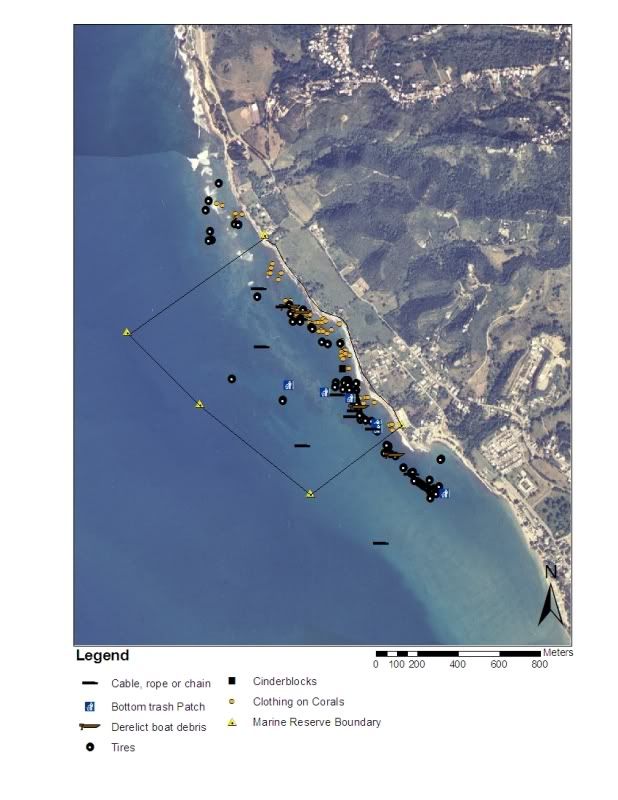
Figure 2. Debris removed ranged from tires, corals smothered by debris (clothing, rope, fishing line), blocks, extensive areas of cable and rope, trash patches, and significant amounts of derelict boat debris.

A total of 225 tires (Figure 3) were extracted bringing the two year total to 475.

Photobucket
Figure 3. Tires were significantly aggregated along the nearshore shelf stretching from Calle Surf to the Black Eagle Marina. Other tires, in decreased frequency, were discovered near Steps beach and north to Marias beach.

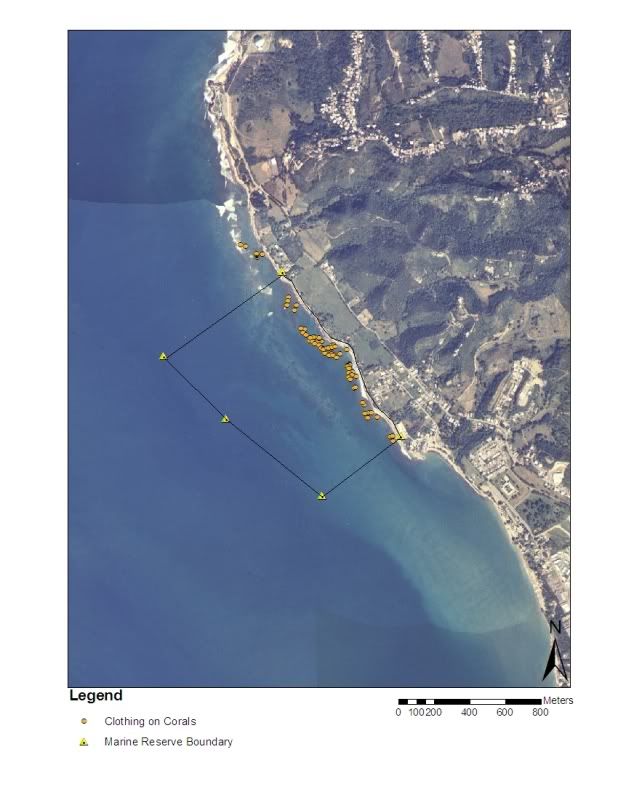
The removal of tires is important because during large winter swell events these tires become projectiles and can easily damage the delicate and endangered Elkhorn coral (Acropora palmata) that resides in the marine reserve and adjacent areas. Not only can tires negatively impact corals but clothing, rope, and other objects can, too. Hence, throughout our effort we also concentrated on removing these types of items from the afftected Elkhorn coral colonies. Every colony discovered (Figure 4) with growth restricting marine debris was photographed, marked with a waypoint, and relieved by carefully cutting, unraveling, and removing the debris.
Photobucket
Figure 4. A total of 120 corals were restored through the removal of clothing, rope, plastic bags, and fishing line within and outside of the marine reserve.

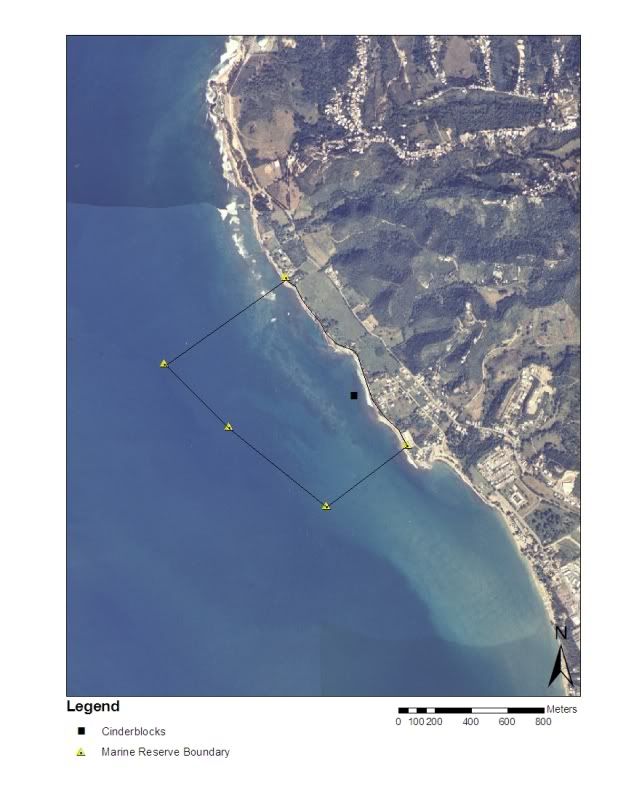
Another strenuous endeavor was the removal of over 50 cinderblocks discovered just offshore Steps beach (Figure 5).
Photobucket
Figure 5. Over 50 cinderblocks were removed from the marine reserve at the above location. These blocks are an un-natural type of habitat that were discovered within an intricate natural habitat. Hence, to improve the reef quality and health they were extracted.

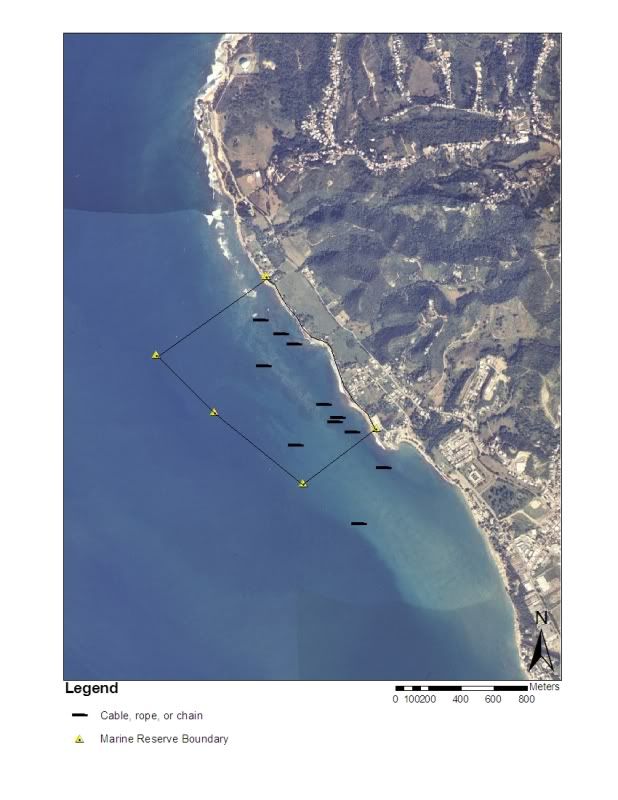
Other items that hinder the quality and health of these reefs are extensive areas of cable, rope, and metal (Figure 6).
Photobucket
Figure 6. A total of 10 extensive areas of cable, rope, and metal were discovered wrapped around hard and soft corals, and preventing other bottom dwelling organisms from colonizing those areas.

Another common discovery were areas of concentrated bottom debris such as plastic bottles and bags, plastic forks and spoons, shoes, clothing, cans, glass bottles, and more
(Figure 7).

Photobucket
Figure 7. These trash patches were usually found on the lee side of large reef formations (i.e. bank shelfs, or patch reefs) where the dominant nearshore currents concentrated the debris and then were reluctant to remove the debris once it was established there.

Lastly, areas of derelict boat debris were frequently discovered during the effort and removed (Figure 8).

Photobucket
Figure 8. Derelict boat debris ranged from fiberglass siding, 2x4’s, wood slates, boat frames, and yolas. There were 4 of these locations with a significant amount of the mentioned items.

The images above summarize the volunteer debris removal effort. Each item was removed by one of the 130 individuals that helped throughout this project. Every item removed, including tires, clothing, rope, etc., were removed with a sense of satisfication knowing that the effort would help improve the health and quality of the reef. But, oftentimes when these items were found, along with miscellaneous objects such as car batteries, engine blocks, oil cans, gas cans, chairs, stuffed animals, and large pvc pipes feelings of dismay and sadness struck the volunteers and project coordinators. It was at these times that it was undoubtedly apparent that education and outreach towards increased reef awareness and protection needs to be a top priority in area schools and throughout the communities in order to to conserve the viability of nearshore reef ecosystems around Puerto Rico.

In effort to protect the future health and quality of the reefs in Rincón, multi-media presentations were given to local students about the severity of this problem and why we should strive to protect these precious natural resources. Annette Blasini an environmental activists and special projects in-school coordinator spearheaded this effort that actively educated and informed over 300 local students. Participating schools were Jorge Ceda Crespo, and the local High School. This effort wouldn’t have been made possible without the help of these schools administration and teachers for supporting and promoting this portion of the project and we are grateful for their help.
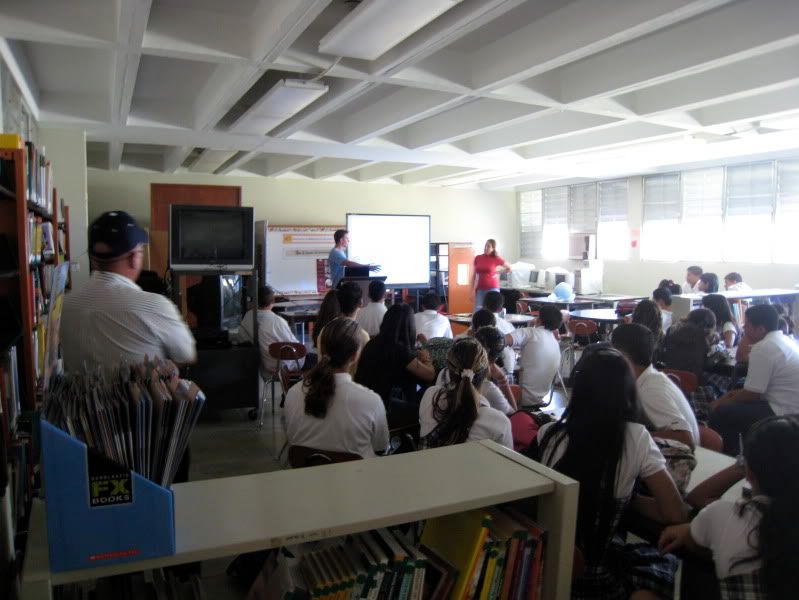
Photobucket

The in-school component of this project culminated in a ‘coral reef book’ generated by the students that participated in this project. The book aimed to build on the core lessons of the presentations; what are coral reefs, why are they special, how are they being threatened, and how we can work together to protect them. These lessons were portrayed in the form of art and writings generated by the kids. The book will be published (soon) and distributed to local schools, agencies, and interested partners. In addition, all art that was generated will be shown at Rincon of the Seas Grand Caribbean Hotel from June 25th until July 9th, 2009. Admission is free and the event is open to the public. We encourage everyone to come and join in on the fun.
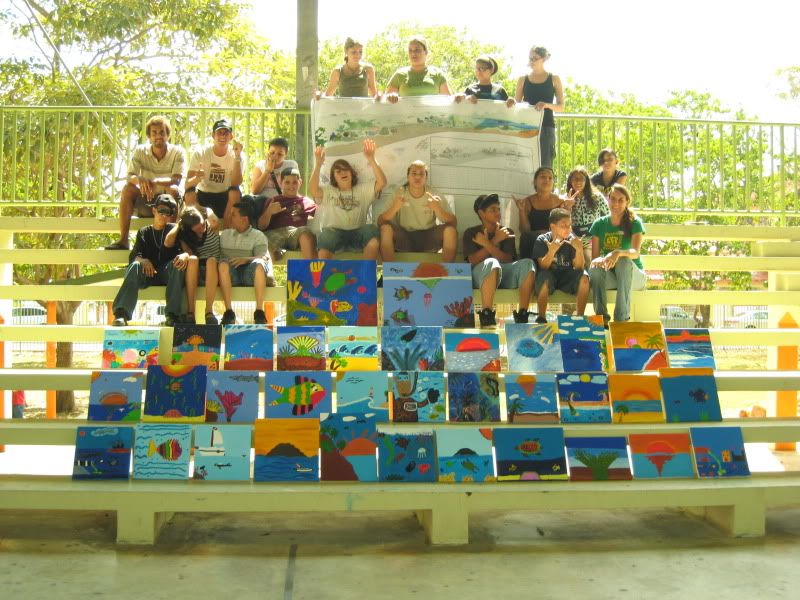
Photobucket

To conclude, this was a successful multi-faceted community project that the Surfrider Foundation Rincón hopes to expand on in the future. In a week, another round of monitoring will begin to determine if more debris still exists and needs to be removed in the future. Thereafter, interested partners and entities that want to pursue continuing this type of work can strive towards acquiring funding opportunities just as the Surfrider Foundation Rincón had done this year. Grants can be achieved, and may be currently offered, by agencies such as our funder, NOAA. We are very grateful for their support in funding this project. In addition, Surfrider Foundation Rincón not only promotes interested people to inquire about this work but also to initiate it in regions other than Rincón. We can offer our guidance, knowledge, and volunteer support when needed, not only within Rincón, but around Puerto Rico. If your interested in helping out in the monitoring series that will begin on June 1st please contact me, in addition to any inquiries about possiblities of future coral reef restoration and debris removal projects. Exito!


Contact me (Wess Merten) at 401-258-4627 or siestasyolas6@aol.com for more information on helping out in this coral reef restoration and marine debris removal effort.